

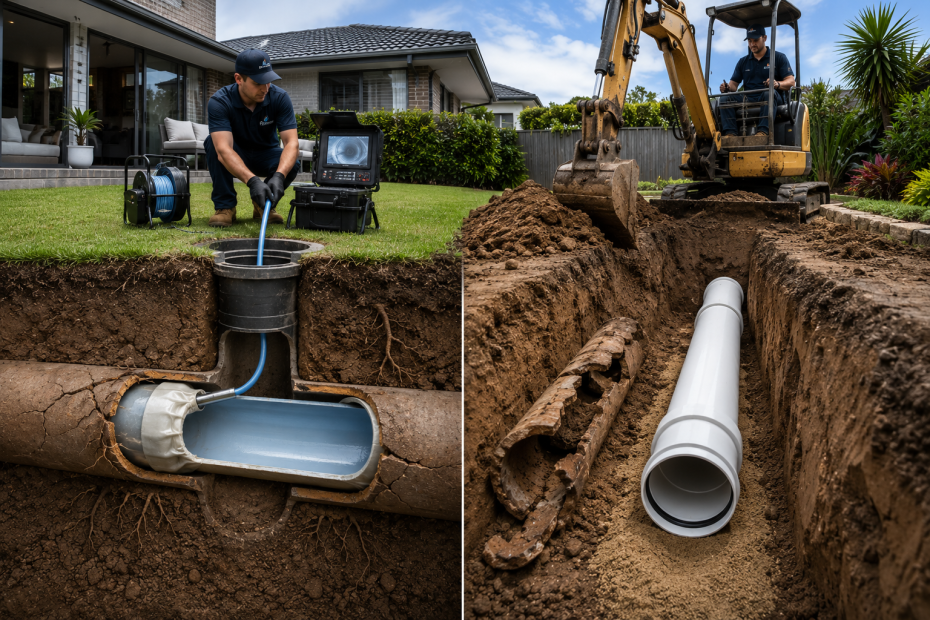
Cracked, damaged or deteriorating pipes don’t necessarily mean your backyard needs to become an excavation site. Modern plumbing technology gives Sydney homeowners more options when repairing underground drainage, with pipe relining often providing an alternative to traditional excavation. But pipe relining vs pipe replacement isn’t simply a matter of choosing the newest technology. The right solution depends on the condition of the existing pipe, the type and extent of damage, accessibility and the long-term requirements of your property.
At Pro Plumber, we assess the problem first before recommending the most appropriate repair method. Here’s how the two options compare.
What Is Pipe Relining?
Pipe relining repairs a damaged pipe from the inside rather than digging it out and replacing it.
The process generally involves inspecting and cleaning the existing pipe before inserting a specialised liner. The liner is positioned against the inside of the damaged pipe and cured to form a new, durable pipe within the existing one.
Because access can often be gained through existing openings or relatively small access points, relining can avoid extensive excavation.
You can explore Pro Plumber’s range of plumbing and drainage services if you’re experiencing recurring drainage or pipe problems.
What Is Traditional Pipe Replacement?
Traditional pipe replacement involves excavating the area around the damaged section, removing the old pipe and installing new pipework.
It remains an important repair method and, in some situations, is the better or only practical option.
Excavation may be required when a pipe has:
- Completely collapsed
- Become severely displaced
- Sustained extensive structural damage
- Lost the shape required to support a liner
- Been installed incorrectly and needs its alignment or fall corrected
Replacement can also make sense when the surrounding area is already being excavated as part of landscaping, renovation or construction work.
When Does Pipe Relining Make Sense?
When comparing pipe relining vs pipe replacement, relining can be particularly attractive when damaged pipes run underneath areas you don’t want to demolish.
Think driveways, tiled areas, landscaping, pathways or other established parts of your property.
Provided the existing pipe is structurally suitable for relining, the process may offer several advantages.
Less Excavation
One of the biggest benefits is avoiding the need to dig a long trench along the existing pipe.
That can mean considerably less disruption around your home.
Existing Landscaping Can Be Protected
You’ve probably spent more time and money on your garden than you’d like to admit. If damaged drainage runs beneath established landscaping, relining may allow repairs without tearing everything apart.
Difficult-to-Access Pipes Can Be Repaired
Pipes located underneath concrete, driveways or other structures can be expensive and disruptive to expose. Relining can sometimes provide access to these sections without major demolition.
A New Internal Pipe Surface
Once cured, the liner forms a smooth new internal surface within the existing pipe, sealing suitable cracks, joints and areas where tree roots have entered.
When Is Pipe Replacement the Better Choice?
Pipe relining is clever, but it isn’t magic.
A CCTV inspection may reveal that the existing pipe has deteriorated beyond the point where relining is appropriate. If a section has collapsed completely or significantly shifted out of position, there may simply be no suitable structure to reline.
Replacement can also provide an opportunity to correct underlying problems with the original installation.
For example, if a drainage pipe has an incorrect fall, relining the existing pipe won’t change its physical alignment. Excavation and replacement may be required to fix the actual cause of the problem.
What About Tree Root Damage?
Tree roots are a common enemy of underground pipes in established Sydney suburbs.
Roots don’t usually smash their way into a perfectly sealed pipe. Instead, they’re attracted to moisture escaping through existing cracks, gaps or deteriorated joints. Once inside, they continue growing and can create substantial blockages and further damage.
Depending on the condition of the pipe, roots will be removed before the pipe is cleaned and relined. However, severe structural damage may require replacement.
This is another reason proper diagnosis matters. Repeatedly clearing roots without repairing the damaged pipe they’re entering can leave you dealing with the same blockage over and over again.
How Do Plumbers Decide Which Option You Need?
You can’t reliably determine the condition of an underground pipe from what’s happening at the kitchen sink.
Professional diagnosis may include a CCTV drain camera inspection to see what’s actually happening inside the pipe. This can identify cracking, root intrusion, displaced joints, collapsed sections and other structural problems.
Once the condition and location of the damage are understood, your plumber can determine which repair methods are technically suitable.
Is Pipe Relining Cheaper Than Replacement?
Not necessarily.
Relining can reduce costs associated with excavation and restoring driveways, paving or landscaping, but every property is different. The length and diameter of pipe, accessibility, amount of preparation required and extent of damage all influence the final cost.
Traditional replacement may sometimes be more economical, particularly when the damaged pipe is easily accessible.
Rather than looking at pipe relining vs pipe replacement purely on the initial plumbing quote, consider the total work required. Digging up and subsequently restoring a landscaped garden, tiled entertaining area or driveway can substantially change the overall cost of conventional replacement.
Don’t Choose the Solution Before Diagnosing the Problem
If you’re experiencing recurring blocked drains, slow drainage, unusual smells or other signs of damaged underground plumbing, the first priority should be finding out what’s causing them.
There’s little value in paying for repeated drain clearing if a cracked or deteriorated pipe underneath your property is the real culprit.
Likewise, there’s no reason to excavate half the backyard if the damaged pipe is a suitable candidate for a less invasive repair.
Reline or Replace Pipes? Start With the Right Diagnosis…
The pipe relining vs pipe replacement decision ultimately comes down to what’s happening underground.
Relining can provide an effective way to repair suitable damaged pipes while reducing excavation and disruption. Traditional replacement remains essential when pipes have collapsed, shifted significantly or need their original installation corrected.
The important part is choosing the solution based on a proper inspection rather than guesswork.
If you’re concerned about damaged or repeatedly blocked pipes at your Sydney property, Pro Plumber can investigate the cause and recommend the most appropriate repair option. Contact us now for a quote and inspection.


